
TL;DR
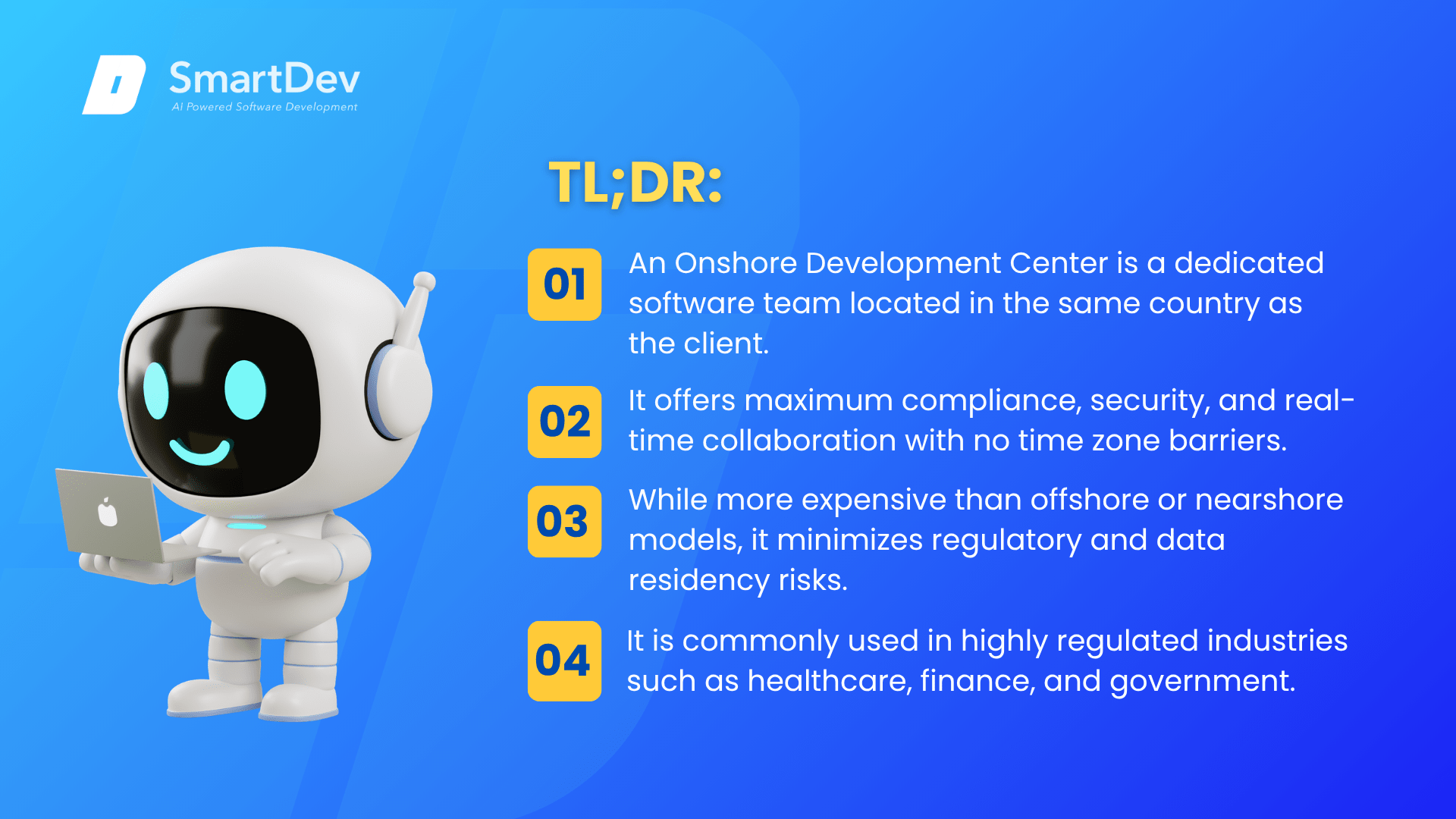
- An Onshore Development Center is a dedicated software development facility located within the same country as the client, offering full compliance, real-time collaboration, and zero time zone friction.
- It costs more than offshore or nearshore models but delivers the highest levels of security, regulatory compliance, and operational alignment.
- Industries with strict data privacy requirements, such as healthcare, finance, and government, most commonly choose onshore development centers.
When regulatory compliance, data residency, and security requirements make offshore outsourcing too risky, an Onshore Development Center provides a structured alternative. Rather than managing an internal headcount, businesses partner with providers who staff a dedicated team within the same country, combining the cost advantages of outsourcing with the compliance benefits of keeping work local.
What is an Onshore Development Center?
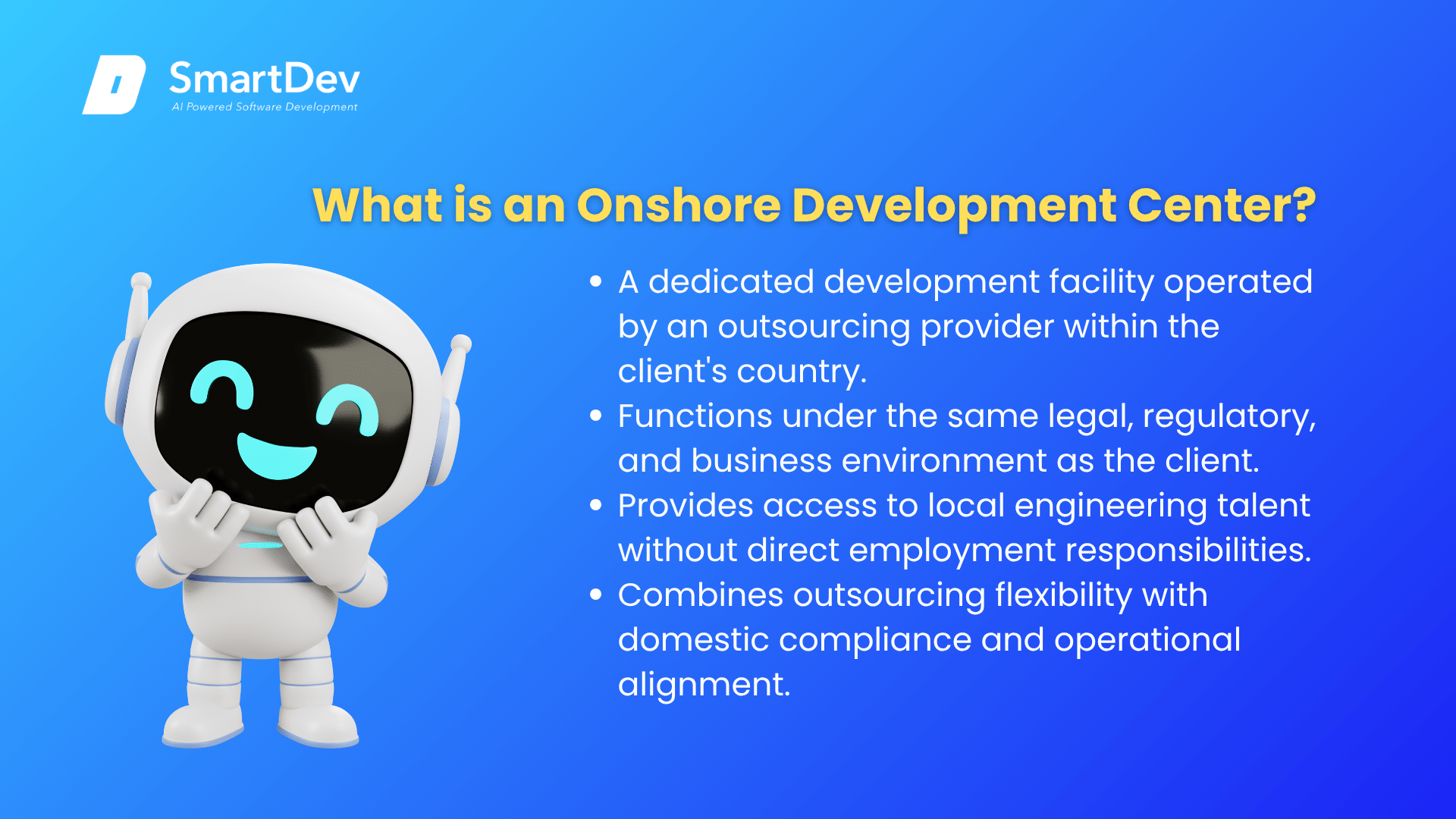 An Onshore Development Center is a dedicated software development facility staffed by an outsourcing partner and located within the client’s own country, providing full domestic compliance, real-time collaboration, and access to vetted local engineering talent without requiring the client to directly employ the staff.
The onshore model sits at the most aligned end of the outsourcing spectrum. Unlike offshore development centers, which are located in distant countries with different time zones and regulatory environments, an onshore center operates under the same legal framework, data privacy regulations, and business culture as the client organization.
Some onshore providers reduce costs by locating their facilities in lower-cost rural or secondary-market cities within the same country, delivering rates that are competitive with entry-level offshore pricing while maintaining domestic compliance standards.
Why It Matters for Businesses?
For industries where data security and regulatory compliance are non-negotiable, the cost savings of offshore development are offset by the compliance risk, contractual complexity, and audit exposure. An onshore center eliminates that exposure.
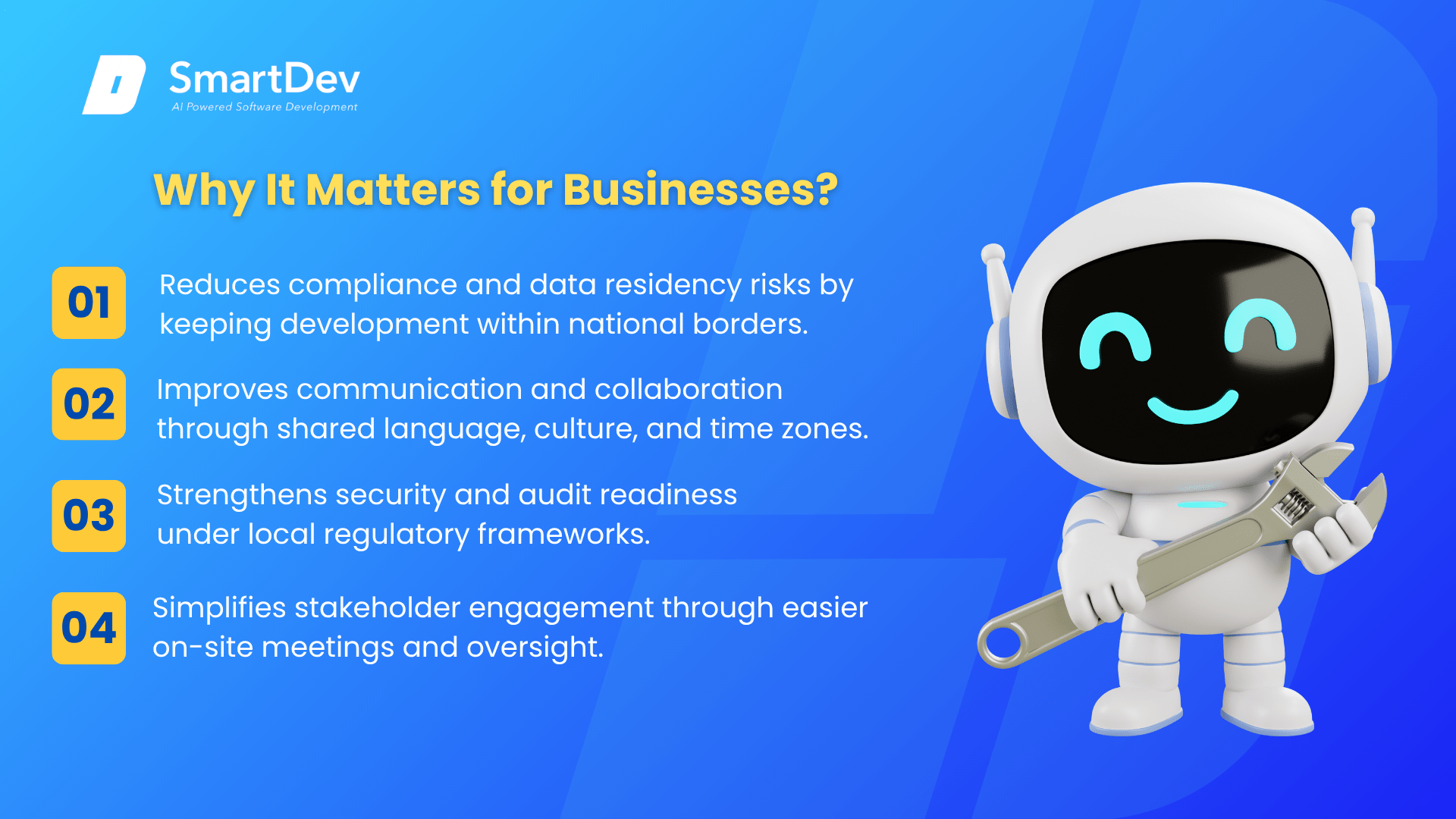
- Reduce compliance risk by keeping all data, code, and intellectual property within domestic legal jurisdiction.
- Improve team collaboration through shared time zones, same-day communication, and the option for on-site visits without international logistics.
- Increase security assurance by operating under domestic data privacy regulations such as HIPAA, GDPR, and SOC 2, with no cross-border data transfer risk.
- Accelerate regulatory approval processes by working with a partner already familiar with industry-specific compliance frameworks.
For example, a U.S. health insurance company that had previously used an offshore development partner for claims processing software switched to an onshore center after a data residency audit flagged compliance gaps. The onshore model eliminated the regulatory exposure, maintained development velocity, and added only 20% to the total annual cost.
Who Uses Onshore Development Centers?
Onshore development centers are most commonly used by organizations in highly regulated industries where data residency, legal jurisdiction, and audit requirements make offshore arrangements impractical or prohibited.
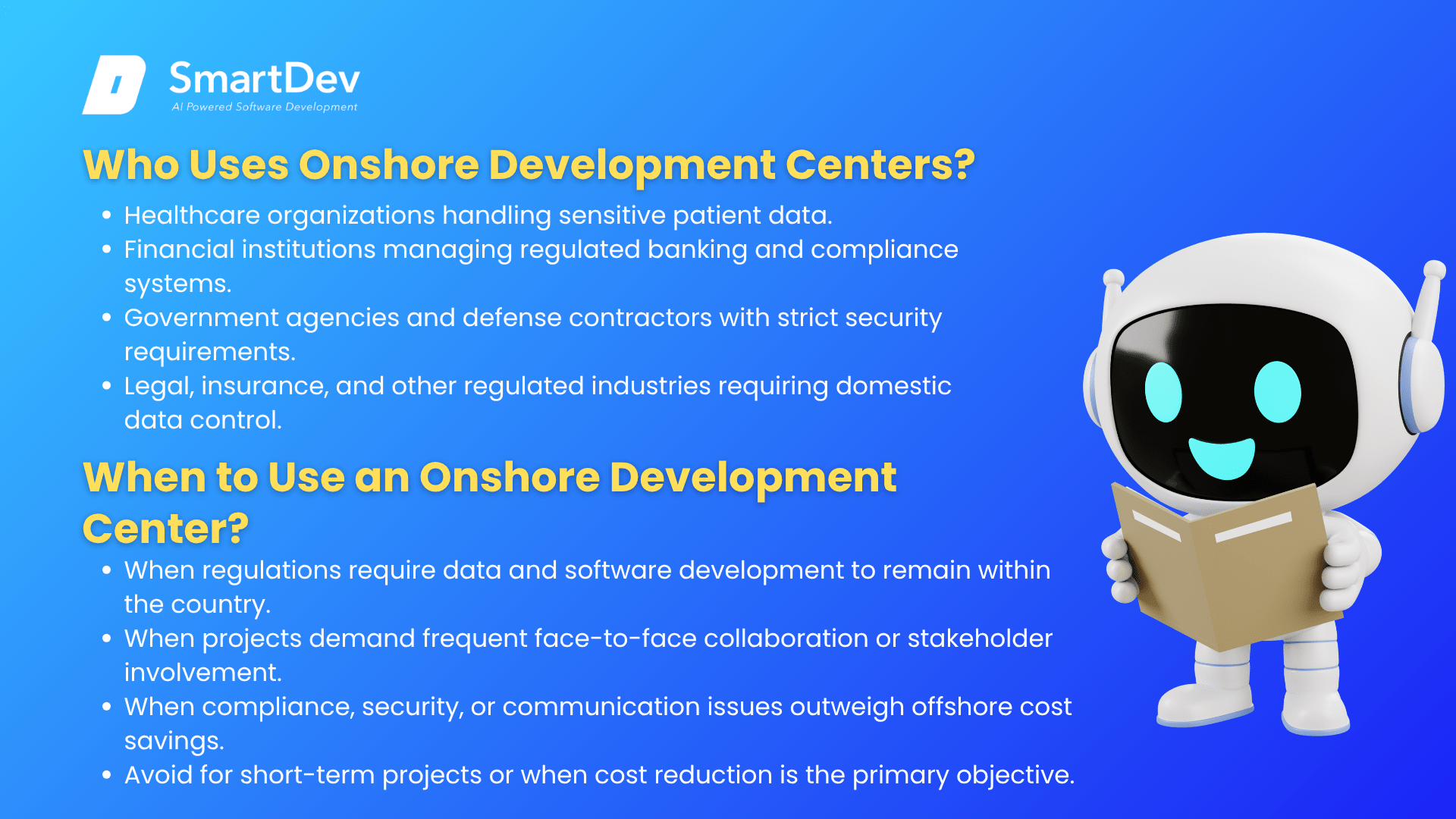
Healthcare companies use onshore centers for systems that handle protected health information (PHI) subject to HIPAA. Financial services firms use them for core banking, trading, and compliance systems where regulators require domestic data control. Government agencies and defense contractors often mandate onshore-only development for national security reasons. Legal and insurance firms use onshore centers for document management and case processing platforms that contain sensitive client data.
From a buyer perspective, the decision is typically driven by General Counsel, Chief Compliance Officers, or Chief Information Security Officers who must demonstrate regulatory compliance to auditors and regulators. CTOs evaluate onshore options when offshore arrangements have created or threatened to create compliance incidents.
When to Use an Onshore Development Center?
- Use an onshore development center when your industry operates under regulations that require all data and code to remain within national borders.
- Use it when your projects require frequent on-site collaboration, stakeholder access, or classified briefings that cannot happen remotely across borders.
- Use it when your previous offshore arrangement has created compliance, communication, or quality issues that are costing more to manage than the cost savings justify.
- Avoid an onshore center if your compliance requirements allow offshore work and cost efficiency is a primary concern, as nearshore or offshore models will deliver significantly better rates.
- Avoid it if your software project is short-term and does not justify the setup and onboarding investment of a dedicated facility arrangement.
Other Related Terms
Nearshore Development: An outsourcing model that uses teams in geographically close countries, offering a middle ground between onshore compliance proximity and offshore cost savings.
Offshore Development Center: A dedicated development facility in a distant country, offering deep cost savings and scale but with greater compliance and time zone considerations than onshore models.
Staff Augmentation: A flexible arrangement where individual engineers from a domestic or offshore partner are embedded into your team, without the infrastructure commitment of a full development center.