
TL;DR
- Pre-sales engineering bridges the gap between a client’s technical requirements and a vendor’s proposed solution before a contract is signed.
- Pre-sales engineers increase deal win rates by ensuring the proposed solution is technically sound and clearly matched to the buyer’s needs.
- It is used across IT services, SaaS, managed services, and custom software development engagements.
Pre-sales engineering is the technical work that happens before a contract is signed to ensure the proposed solution actually solves the client’s problem. In IT outsourcing and enterprise technology sales, it is the function that turns a sales conversation into a credible, tailored proposal. This article explains what it involves, who uses it, and how it works in practice.
What is Pre-sales Engineering?
Pre-sales engineering is a discipline within technology sales where technical experts work alongside sales teams to assess client requirements, design solution architectures, and demonstrate that a proposed product or service can meet the buyer’s specific needs. A pre-sales engineer, also called a solutions engineer or solutions architect, is responsible for translating business problems into technical solutions before any agreement is reached. Their role is distinct from a salesperson: the salesperson focuses on the business value and commercial terms, while the pre-sales engineer focuses on the technical feasibility and fit. Activities include requirements discovery, solution scoping, proof-of-concept builds, technical presentations, and responding to requests for proposals (RFPs). The goal is to give the buyer confidence that the vendor’s solution works before they commit.
Why It Matters for Businesses?
Buying complex IT solutions without proper pre-sales engineering is a major source of failed implementations and budget overruns. Investing in this function, whether in-house or outsourced, reduces that risk significantly.
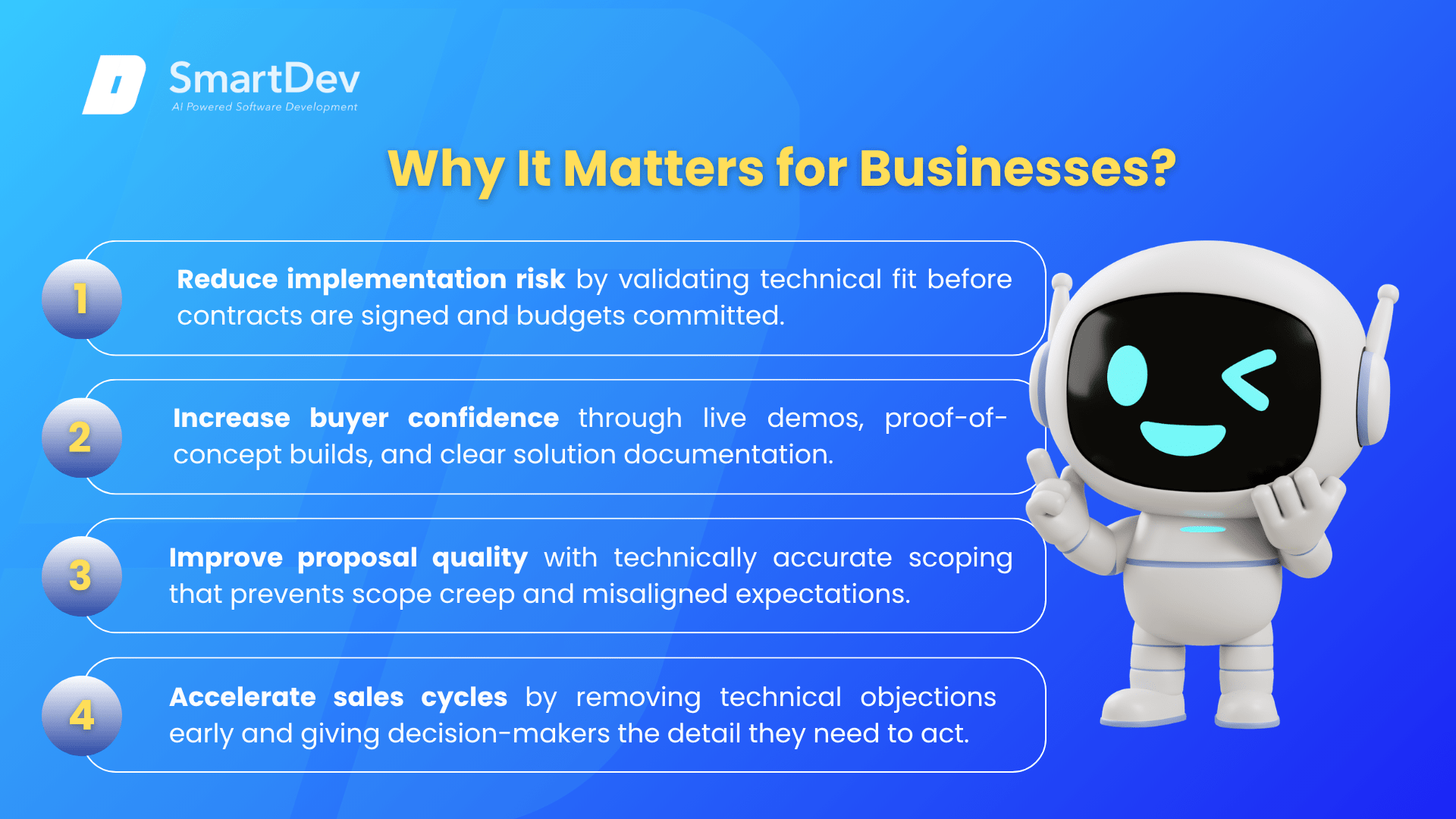
- Reduce implementation risk by validating technical fit before contracts are signed and budgets committed.
- Increase buyer confidence through live demos, proof-of-concept builds, and clear solution documentation.
- Improve proposal quality with technically accurate scoping that prevents scope creep and misaligned expectations.
- Accelerate sales cycles by removing technical objections early and giving decision-makers the detail they need to act.
For example, a financial services company evaluating a new data analytics platform required a proof-of-concept before approving the purchase. The vendor’s pre-sales engineer built a working prototype using the client’s own data within two weeks. This directly addressed the key technical objections, shortened the sales cycle by six weeks, and led to a contract worth three times the initial estimate.
Who Uses Pre-sales Engineering?
Pre-sales engineering is used across a wide range of industries and buyer roles:
- Enterprise software and SaaS vendors use pre-sales engineers to demonstrate complex platforms to large accounts.
- IT outsourcing and managed services providers rely on them to scope custom engagements and respond to enterprise RFPs.
- Cloud and infrastructure companies use solutions architects to design deployment models before contracts are finalized.
On the buyer side, the primary contacts are CTOs, IT Directors, and technical procurement managers. These are the individuals who need technical validation before they can recommend a vendor to the C-suite. Pre-sales engineers speak their language and provide the depth of evidence that purchasing decisions at this level require.
How Does It Work?
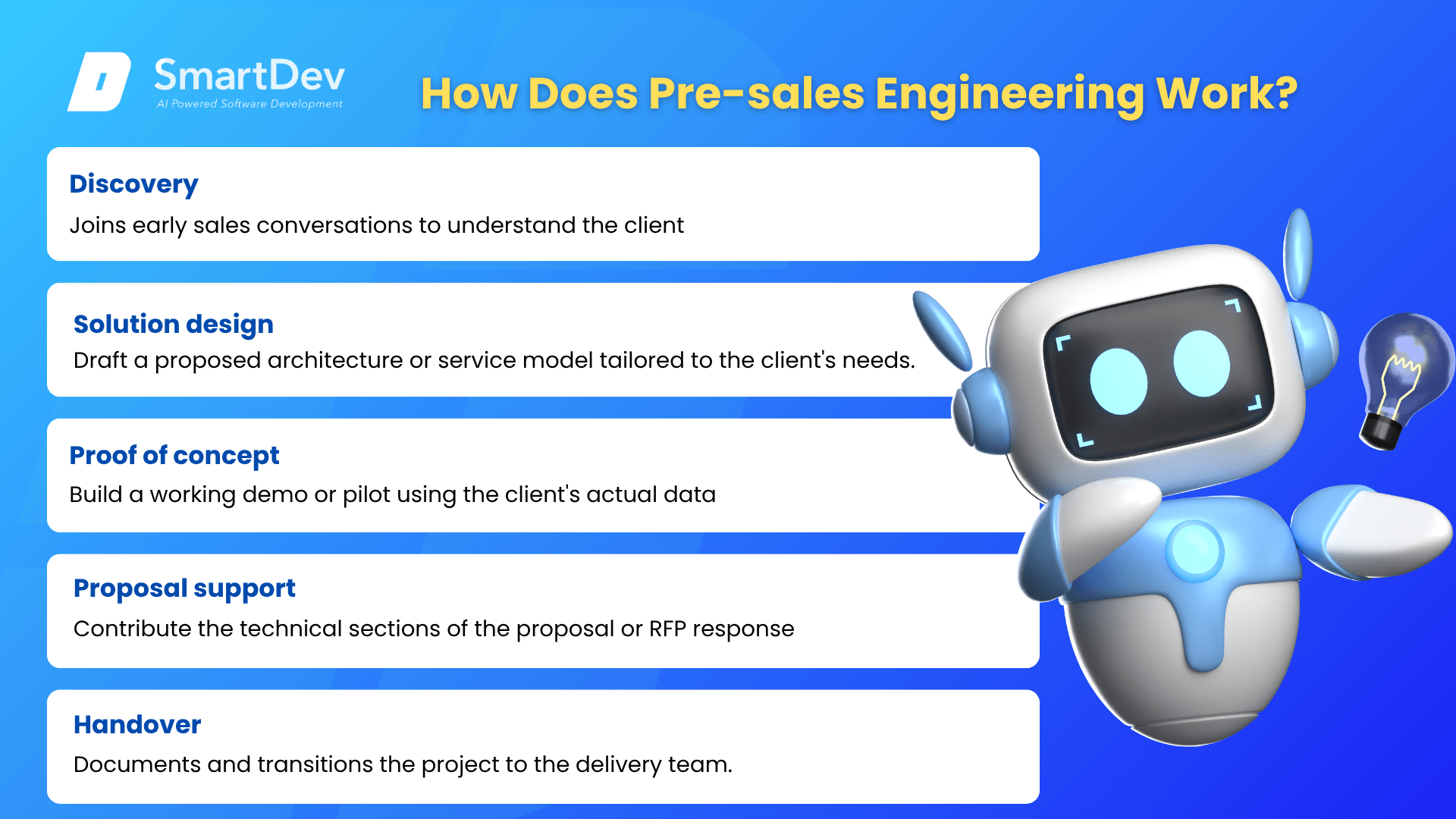
- Discovery — The pre-sales engineer joins early sales conversations to understand the client’s technical environment, pain points, and constraints.
- Solution design — Based on discovery findings, they draft a proposed architecture or service model tailored to the client’s needs.
- Proof of concept — Where needed, they build a working demo or pilot using the client’s actual data or systems to prove technical feasibility.
- Proposal support — They contribute the technical sections of the proposal or RFP response, ensuring accuracy and credibility.
- Handover — Once the deal is won, the pre-sales engineer documents everything and transitions the project to the delivery team.
The result is a smoother sales process, fewer surprises during implementation, and a stronger foundation for the client relationship.
Other Related Terms
Architecture Design: The process of defining how a software system’s components are structured, connected, and governed to meet business and technical requirements.
Commercial Proposal: A formal document submitted by an IT outsourcing vendor that outlines the proposed solution, delivery approach, team composition, timeline, and pricing for a client engagement.
Solution Pitch: a tailored presentation that frames a vendor’s offering as the specific answer to a client’s defined business problem.