
TL;DR:
- Account management is the structured process of building and maintaining long-term relationships between a service provider and its clients.
- In IT outsourcing, dedicated account managers serve as the primary point of contact, ensuring service quality, alignment, and client satisfaction.
- Strong account management directly reduces churn, improves delivery outcomes, and creates opportunities for expanding the partnership.
In IT outsourcing, the quality of service delivery is only part of what determines a successful partnership. How that service is managed, communicated, and evolved over time is equally important. Account management is the operational and strategic discipline that bridges a vendor’s capabilities with the ongoing needs of the client, ensuring both parties stay aligned throughout the engagement.
What is Account Management?
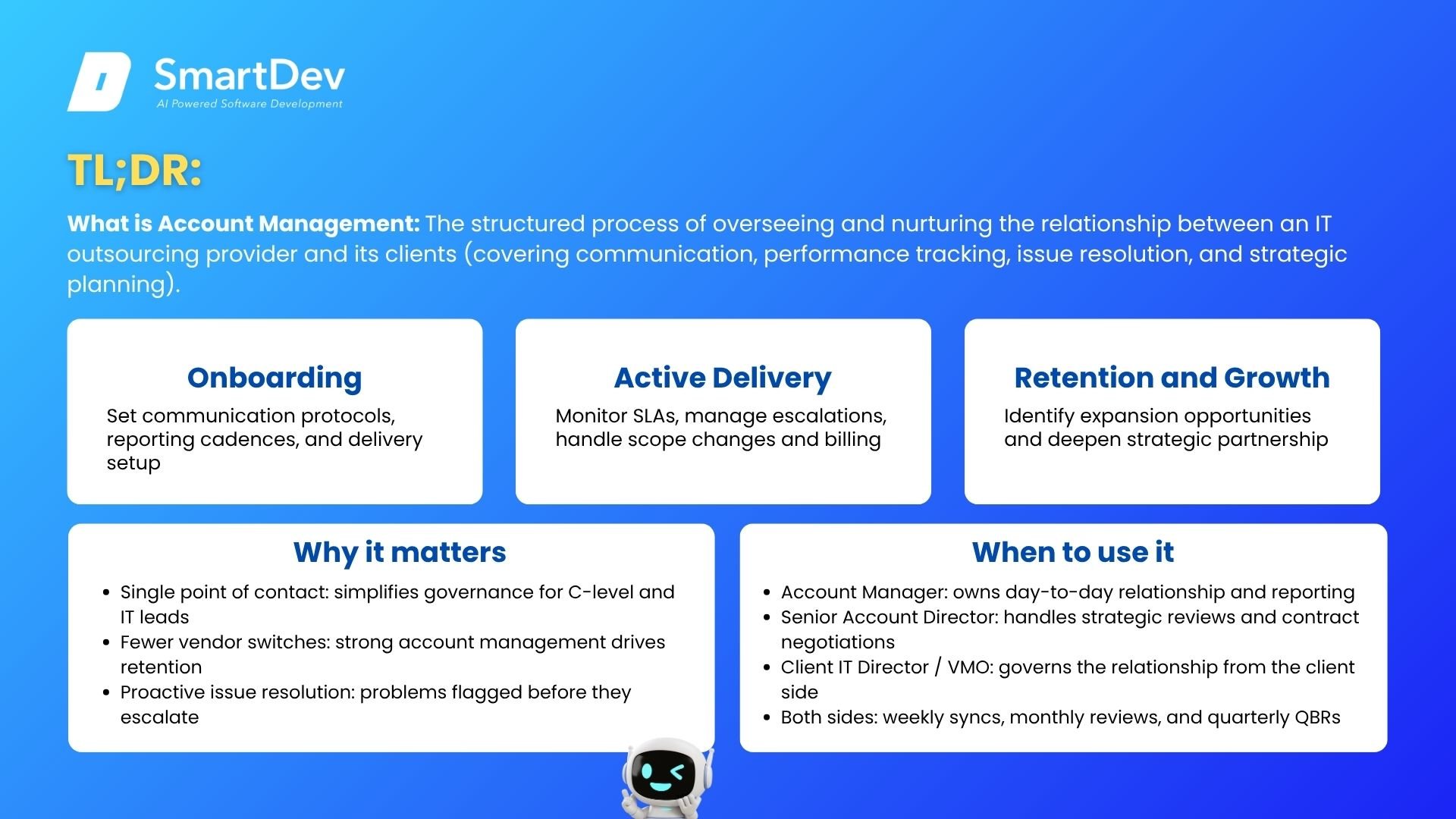
Account management is the process of overseeing and nurturing the relationship between a service provider and a client organization. It encompasses communication, performance tracking, issue resolution, contract management, and strategic planning to ensure that the client receives consistent value from the engagement.

In the context of IT outsourcing, account management is typically handled by a dedicated account manager or client success manager assigned to a specific client or portfolio of clients. This person serves as the primary point of contact for the client, coordinating internally across delivery, technical, finance, and legal teams to address client needs.
Account management operates across two dimensions: tactical and strategic. On the tactical level, it involves managing day-to-day communications, tracking service performance against agreed KPIs and SLAs, handling escalations, and ensuring invoicing and reporting are delivered on schedule. On the strategic level, it involves understanding the client’s evolving business goals, identifying opportunities to expand the scope of services, and positioning the outsourcing partner as a long-term extension of the client’s team.
Effective account management requires a combination of business acumen, interpersonal skills, and a deep understanding of the services being delivered. Account managers who can speak both the language of business and technology are particularly valuable in IT outsourcing contexts.
Why It Matters for Businesses?
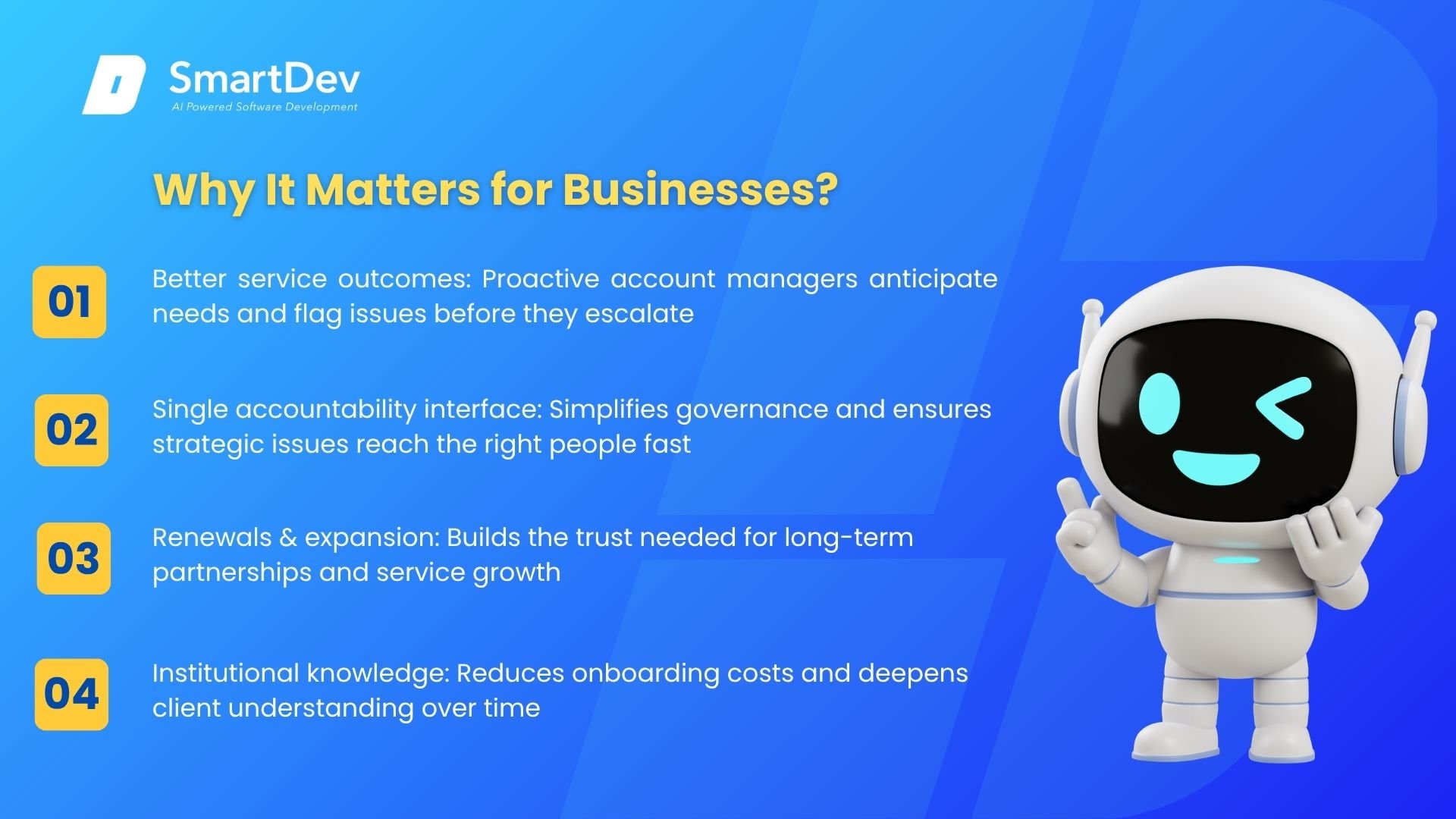
For client organizations, a strong account management relationship translates directly into better service outcomes. When an account manager truly understands the client’s business context, they can anticipate needs, flag potential issues before they escalate, and proactively recommend improvements to the delivery model.
From the perspective of a C-level executive or IT manager, account management is the mechanism that holds the outsourcing partnership accountable. Rather than relying on individual project managers to communicate with multiple contacts at the vendor, a dedicated account manager provides a single, consistent interface. This simplifies governance and ensures that strategic issues are elevated to the right people quickly.
Account management also plays a critical role in contract renewals and service expansion. Vendors with strong account management practices are better positioned to demonstrate value, quantify results, and build the trust that leads to long-term partnerships. For clients, this means fewer transitions between vendors, reduced onboarding costs, and a vendor team that builds institutional knowledge over time.
Poor account management, on the other hand, is one of the most cited reasons businesses switch outsourcing providers. Delayed responses, misaligned expectations, and lack of proactive communication erode confidence even when technical delivery is strong. This is why leading IT outsourcing firms invest heavily in account management infrastructure and training.
Who Manages Account Management?
Account management responsibilities are distributed across several levels of the vendor organization. At the primary level, a dedicated account manager or client success manager owns the relationship day to day. They are responsible for regular check-ins, performance reporting, issue resolution, and relationship health monitoring.
Above the account manager, a senior account director or VP of Client Success typically oversees a portfolio of accounts, stepping in for strategic reviews, contract negotiations, and executive-level relationship building. These senior stakeholders ensure that the vendor’s leadership remains engaged with the client’s top priorities and that any systemic delivery issues are addressed at the right organizational level.
On the client side, account management is typically coordinated through a procurement or vendor management function, an IT director, or a designated project sponsor. In larger organizations, a formal Vendor Management Office (VMO) may govern all outsourcing relationships, including setting standards for how account managers should report and communicate.
The most effective account management structures include regular cadence meetings, such as weekly operational syncs, monthly performance reviews, and quarterly business reviews (QBRs) that bring together senior leaders from both sides to assess progress and align on strategic direction.
How Does Account Management Work?
Account management in IT outsourcing follows a structured lifecycle aligned with the phases of the client engagement. During onboarding, the account manager establishes communication protocols, sets up reporting cadences, and ensures the delivery team has all the information needed to begin work effectively.
During active delivery, the account manager monitors performance against SLAs and KPIs, facilitates escalations, manages scope change requests, and coordinates billing and contract administration. They maintain a clear picture of the client’s satisfaction through structured feedback mechanisms, such as Net Promoter Score (NPS) surveys or periodic satisfaction reviews.
As the engagement matures, account managers shift focus toward retention and growth. This includes identifying new service opportunities that align with the client’s evolving technology roadmap, presenting business cases for expanding the team or adding capabilities, and ensuring the client views the vendor as a strategic partner rather than a transactional supplier.
Account management platforms and CRM tools, such as Salesforce or HubSpot, are commonly used to track interactions, manage contracts, log issues, and maintain a 360-degree view of the client relationship. Regular internal reviews between the account manager and delivery leadership ensure alignment between what is promised and what is delivered.
Other Related Terms
SLA (Service Level Agreement): A formal agreement between a service provider and a client that defines the expected level of service, including performance standards, response times, and resolution targets. SLAs are the contractual backbone of Account Management, giving account managers a clear standard to measure delivery against and a shared reference point for client conversations about service quality and expectations.
Client Retention: The ability of an organization to keep existing clients engaged and satisfied over time. Client Retention is the primary measure of Account Management effectiveness. When account managers proactively address issues, align on evolving needs, and demonstrate consistent value, retention follows naturally as a result.
Client Satisfaction Score: A metric used to measure how satisfied a client is with the service or product they receive. Client Satisfaction Score gives account managers a quantifiable signal of relationship health, helping them identify accounts that need attention before dissatisfaction escalates into churn or contract disputes.